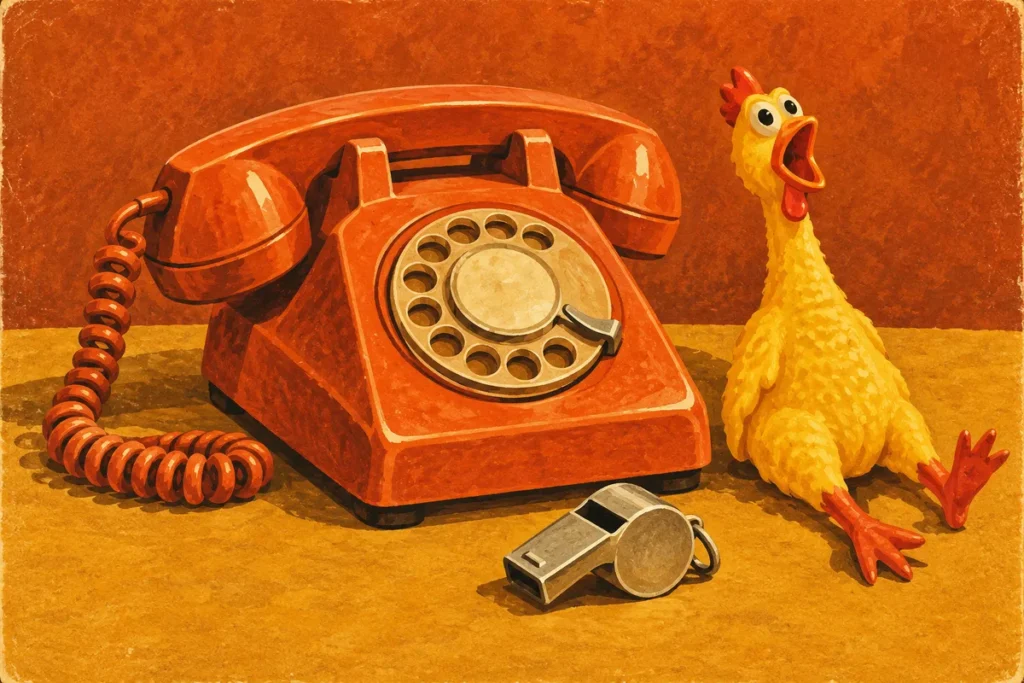
Yes, a prank can lead to jail if it breaks a law, such as harassment, threats, damage, a fake emergency or tampering with food or drink. A harmless one-time joke on a friend who laughs rarely does. A prank can also lead to a lawsuit. Laws vary by state. This is general information, not legal advice.
When a prank becomes a crime
Whether a prank is a crime depends on what you did, how often, and what the other person felt. These are the common lines.
Prank calls and messages. Federal law makes it a crime to make a call “without disclosing his identity and with intent to abuse, threaten, or harass any specific person,” or to place “repeated telephone calls” or messages “solely to harass any specific person.” The penalty can be a fine or “not more than two years” in prison (47 U.S.C. 223). A call to a friend in your own voice that ends in a laugh is not what that law is about. A hidden number and repeat calls to someone who is scared are much closer to what it targets.
Repeated pranks on one person. Harassment and stalking laws focus on a pattern. Federal law defines a “course of conduct” as “a pattern of conduct composed of 2 or more acts, evidencing a continuity of purpose” (18 U.S.C. 2266). California’s stalking law reaches “a knowing and willful course of conduct directed at a specific person that seriously alarms, annoys, torments, or terrorizes the person, and that serves no legitimate purpose” (Penal Code 646.9), and the crime also needs a credible threat. Texas harassment law covers a person who acts “with intent to harass, annoy, alarm, abuse, torment, or embarrass another” (Penal Code 42.07). New Jersey can reach a single anonymous message sent with the purpose to harass. One joke is rarely a pattern. Two or three on someone who wants them to stop can be.
Fake emergencies and hoaxes. A prank that falsely says a bomb, a weapon or an attack is real or coming, in a way people could reasonably believe, can be a federal crime. Under 18 U.S.C. 1038, that can bring “not more than 5 years” in prison, and more if someone is hurt. Do not call the police, a hotel or a school as a joke.
Tampering, damage and touching. Putting something in someone’s food or drink, breaking or wrecking their property, or touching them without their consent falls under ordinary state laws on assault, battery and vandalism. The laxative “prank” article on this site explains why that classic is a bad idea.
Fake legal papers. A fake summons or court notice can break a state law even if it says it is a joke. Texas Penal Code 32.48(c) says it is no defense that the paper “states that it is not legal process.” Florida Statutes 817.39(2) says the same.
When a prank can get you sued
A person does not have to prove a crime to sue you. Civil claims ask whether you caused harm and whether you meant to. A 2018 complaint filed in Queens, New York, after a glitter package, pleaded battery, assault and intentional infliction of emotional distress (the outcome is not found). A 2021 New Jersey complaint reported in the news listed six counts, including assault, battery and negligence (the outcome is not found).
For a prank call, the usual claims are about harm: distress, lost work or money, or fear. The more the call was a joke between people who know each other, the weaker those claims are. The more it was repeated, hidden or frightening, the stronger they are. Some states also require every person on a call to agree before you record it, so do not record and post a prank call without checking the rule in your state.
What the law looks at
Courts and police look at the same few things:
- Intent. Did you mean it as a joke, or to scare, annoy or hurt?
- Repeats. Was it once, or again and again?
- Harm. Was anyone scared, hurt or out of pocket?
- Consent. Does the person know you and laugh with you, or did they ask you to stop?
- Disguise. Did you hide who you were so they could not tell it was a joke?
A joke that is once, kind, quickly explained and safe to open is almost always fine. The trouble starts when one of those flips.
How to keep it a joke
- Tell them within minutes. A prank that ends in a laugh is not harassment. A prank that drags on is.
- Do it once. If it works, you are done.
- Stop when they ask. Say sorry and stop, the first time.
- Pick a friend who loves a bit. If you are unsure they will laugh, send something kind instead.
- Skip anything about health, money, family, work or their body.
- No fake bills, court papers or government notices.
- Do not post it without asking. A video can turn a joke into a bigger problem.
Want a safe one to try? Our homemade slime recipe and the fake everything page are made for it.
Mail has its own rules
Mail has its own rules too. One harmless piece to a friend who will laugh is generally fine, and repeated unwanted mail to one person is where trouble starts. GlitterBombTrap, a HowToRevenge shop, explains whether prank mail is legal.
If you were pranked and it was not funny
Tell the person to stop, in writing if you can. Keep the messages, the call log and any packaging. If you feel threatened, call your local police on their non-emergency line, and call 911 if you are in danger. If you were hurt or lost money, talk to a local lawyer. A short talk with the person who pranked you often settles it before any of that.
FAQ
Can you go to jail for prank calling someone?
Yes, if the calls break a law. Federal law can punish a call made with intent to abuse, threaten or harass a specific person, with a fine or up to two years in prison. States have their own rules. A single call to a friend who laughs is very different from repeated calls to a stranger.
Can you get sued for prank calling someone?
Yes. A person can sue over a prank call if it caused harm, such as distress, lost money or fear. Courts look at whether it was a joke between people who know each other or an unwanted, repeated or frightening call. Outcomes depend on the state and the facts. This is not legal advice.
Is prank calling illegal?
It can be. A call placed without giving your name and with intent to abuse, threaten or harass someone is a federal crime, and repeated calls meant only to harass can be too. A friendly call to someone who knows it is you and laughs is not what those laws target.
Is it illegal to prank someone?
A harmless prank on a friend who laughs is generally not illegal. A prank becomes a problem when it threatens, harasses, damages property, tampers with food or drink, reports a fake emergency or repeats after the person asks you to stop. State laws differ, and this is general information, not legal advice.
Can you get in trouble for pranking a friend?
Usually not, if it is safe, kind and a one-time joke they laugh at. You can get in trouble if you ignore a request to stop, repeat the prank, scare or hurt them, or damage something. Tell them quickly that it was a joke, and stop the moment they ask.